

"Moja fotografia nie jest zapisem wydarzeń.
Nie dokumentuję dzieciństwa ani nie opowiadam historii w sensie narracyjnym. Interesuje mnie moment, w którym ciało po prostu istnieje – w świetle, w ciszy, w czasie.
Pracuję z relacją rodzicielską nie jako tematem, lecz jako przestrzenią obecności. Fotografując, nie szukam gestu ani emocjonalnego punktu kulminacyjnego. Szukam napięcia między światłem a materią ciała. Szukam chwili, w której obraz przestaje być ilustracją, a staje się doświadczeniem trwania.
Światło w mojej pracy nie pełni funkcji opisowej. Nie modeluje sceny, lecz konstytuuje formę. Ciało wyłania się z ciemności nie jako bohater opowieści, lecz jako byt. Światło konstruuje byt. Interesuje mnie ontologia obrazu – pytanie o to, co sprawia, że fotografia staje się miejscem istnienia, a nie tylko reprezentacją.
...postać trwa
...światło osiada
...czas się zagęszcza
...ruch jest minimalny
obraz jest bardziej stanem niż sceną
To jest fotografia stanu istnienia.
Długofalowość projektu jest dla mnie kluczowa. Dorastanie, dojrzewanie i przemijanie nie są tematami, lecz procesami, które ujawniają się w powtarzalności spojrzenia. Fotografia staje się powolnym zapisem czasu, który nie jest linearną narracją, lecz warstwą nakładających się obecności.
Nie fotografuję emocji. Fotografuję ciszę między nimi.
Nie fotografuję dzieciństwa. Fotografuję moment, w którym światło dotyka ciała i czyni je widzialnym.
Moja praca jest próbą uchwycenia tego, co pozostaje, gdy wszystko inne znika.
zapraszam"
piątek 27.02 godz. 18.00
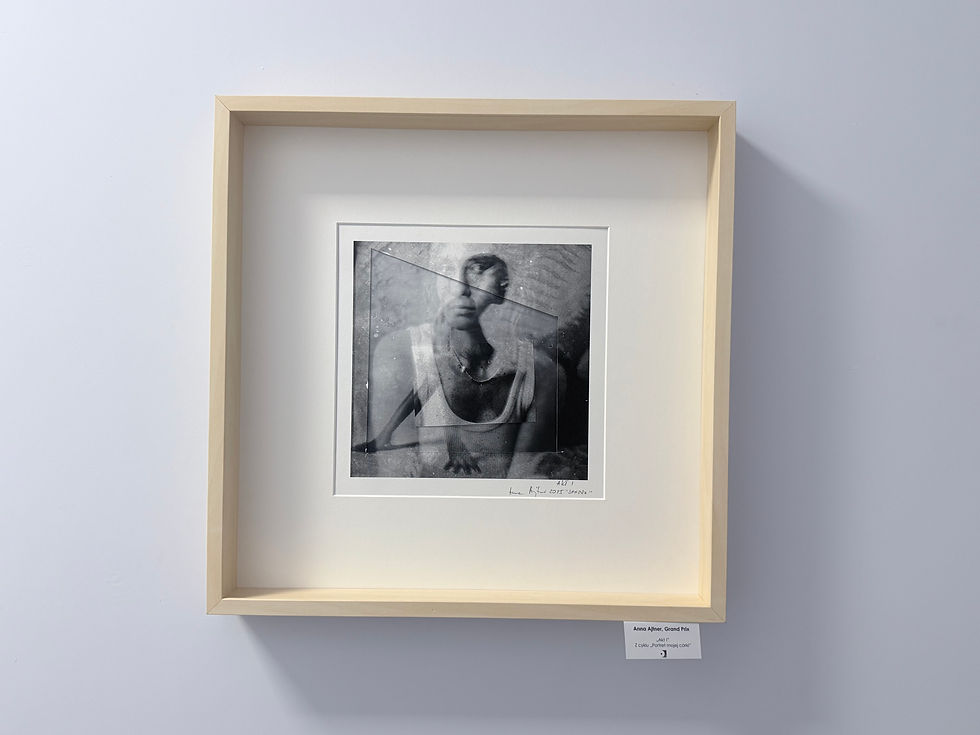
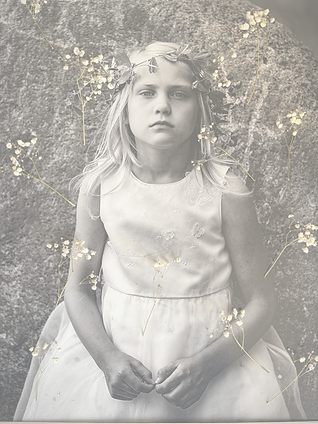
„Moja praktyka fotograficzna wyrasta z relacji matki i córki oraz z potrzeby uważnego zapisu dzieciństwa jako procesu kruchego, cielesnego i nieodwracalnego. Od lat realizuję cykl symbolicznych, performatywnych fotografii tworzonych wspólnie z moją córką, w których aparat staje się narzędziem współuczestnictwa, a nie obserwacji. Fotografia pełni tu funkcję intymnego rejestru – dokumentuje gest, dotyk i obecność ciała, a z czasem przekształca się w portrety cielesne naznaczone odciskami palców, kurzem, rysami i uszkodzeniami powierzchni obrazu. Te materialne ślady stają się metaforą upływu czasu i przemijania, któremu podlega zarówno ciało, jak i pamięć.”
,,Światłoczułe obrazy pozostawiam w przestrzeni, pozwalając im powoli zapisywać światło wnętrza, w którym się znajdują. Czas ekspozycji nie jest precyzyjnie domknięty – obraz rejestruje trwanie, zmienność dnia, obecność i nieobecność. Powstaje zapis światła miejsca, a nie jego przedstawienie. Obraz nie jest naświetlany jednorazowo, lecz „zamieszkuje” przestrzeń, absorbując jej rytm, intensywność i zmienność światła. Proces ten traktuję jako zapis czasu i obecności miejsca. Równolegle prowadzę dokumentację fotograficzną i opisową kolejnych etapów tego zapisu, traktując go jako integralną część pracy.”
Museum of Photography in Bydgoszcz | February 2026
🇬🇧
Following the Light | Retrospective Exhibition
Following the Light
(fr. À la poursuite de la lumière; gr. Αναζητώντας το φως)
This exhibition is a record of breathing - understood not as a metaphor, but as a real, bodily process. Breath becomes a movement between light and matter, between presence and disappearance, between what is visible and what can only be sensed. Photography does not function here as representation; it becomes a trace - a record of time, contact, and touch.
Following the Light is a retrospective exhibition by Anna Ajtner, tracing a long-term photographic and artistic journey shaped by closeness, presence, and constant transformation. Its point of departure lies in intimate, performative portraits of the artist’s daughter - images rooted in relationship, care, and shared experience - which gradually open toward other bodies, landscapes, and transitional forms between analog photography, digital imagery, and moving image.
The central motif of the exhibition is light - not as an aesthetic form, but as a carrier of memory and experience. Bodily portraits created on analog photographic film bear visible traces of process: dust particles, scratches, fingerprints, shifts in focus. These elements are not defects, but integral components of the image. Photography reveals its materiality and corporeality - its fragility and vulnerability to time.
As the exhibition unfolds, portraiture gradually opens toward landscape, which becomes a space of breathing. Horizons and transitional zones do not function as neutral backgrounds; they extend inner states, forming areas where the image breathes, expands, and slows down. This shift is accompanied by transitions between techniques: analog and digital coexist, permeate one another, and remain in dialogue - through collage, multiplication, and multiple exposure - without hierarchy.
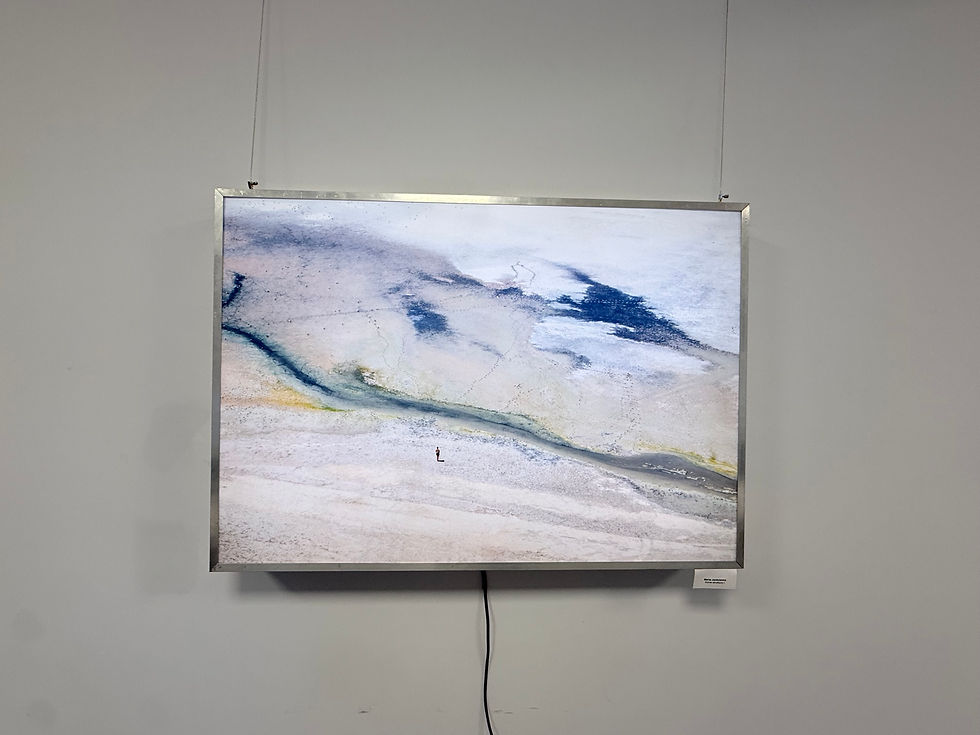
Lightboxes featuring abstract images of light on water and salt surfaces in Greece introduce the visual pulse of the exhibition - a rhythm of inhalation and exhalation, tension and release. They are threshold images in which light organizes the breathing rhythm of the entire exhibition.
Color portraits of the daughter, the presence of works by students, and the guest participation of Marta Jankowska do not form separate chapters, but resonate within a single structure. They expand the
narrative with relational, educational, and intergenerational dimensions, emphasizing photography as a field of co-presence, transmission, and learning.
The exhibition does not follow a linear narrative. It is an organism that breathes. It is not an archive, but a path - an invitation to attentive presence, to moving between closeness and distance, stillness and motion, matter and light. Following the light does not imply reaching a destination, but rather a continuous act of presence and looking.
The exhibition culminates in two new works from the cycle Painting with Light, which form the final stage of this long-term journey. These works shift Anna Ajtner’s artistic practice beyond photography understood as recording or representation, toward the image as an event and a process. Light does not register reality here; it acts directly upon the material of the image - becoming both its agent and co-author.
In Painting with Light, the artist establishes only an initial field: a surface covered with light-sensitive chemistry - specifically cyanotype - and the conditions of exposure. From that point on, the image develops autonomously, under the influence of light, time, and chemical reactions. The process remains partially unpredictable, and its outcome becomes a form of discovery rather than the execution of a predetermined goal.
Time functions here as an active medium: the image endures, changes, and ages. The possibility of halting the process through impregnation or the preservation of a selected moment does not imply closure, but a conscious indication of a stage within a continuous flow of transformation. In some works, a barely discernible human figure appears - once again the artist’s daughter - a trace of presence that does not organize a narrative, but serves as a point of reference for processes unfolding within the material of the image.
These works can be read as a natural consequence of earlier explorations: from intimate portraiture, through corporeality and landscape, toward an image that almost entirely relinquishes agency to light and time. Painting with Light does not close the exhibition; it opens it - leaving the viewer in a space of attentive observation, where the image continues to breathe, change, and remain in motion.
Following the Light is an invitation to contemplation - to pause, to look, and to reflect on the relationship between image, time, and light, both in personal and universal dimensions.
The exhibition is supported by a scholarship from the City of Bydgoszcz.
Further details will be announced soon.
🇵🇱
„Podążając za światłem”
(fr. À la poursuite de la lumière; gr. Αναζητώντας το φως)
Ta wystawa jest zapisem oddychania - rozumianego nie jako metafora, lecz jako realny, cielesny proces. Oddech staje się ruchem pomiędzy światłem a materią, pomiędzy obecnością a zanikiem, pomiędzy tym, co widzialne, a tym, co jedynie przeczuwalne. Fotografia nie pełni tu funkcji reprezentacji; staje się śladem - zapisem czasu, kontaktu i dotyku.
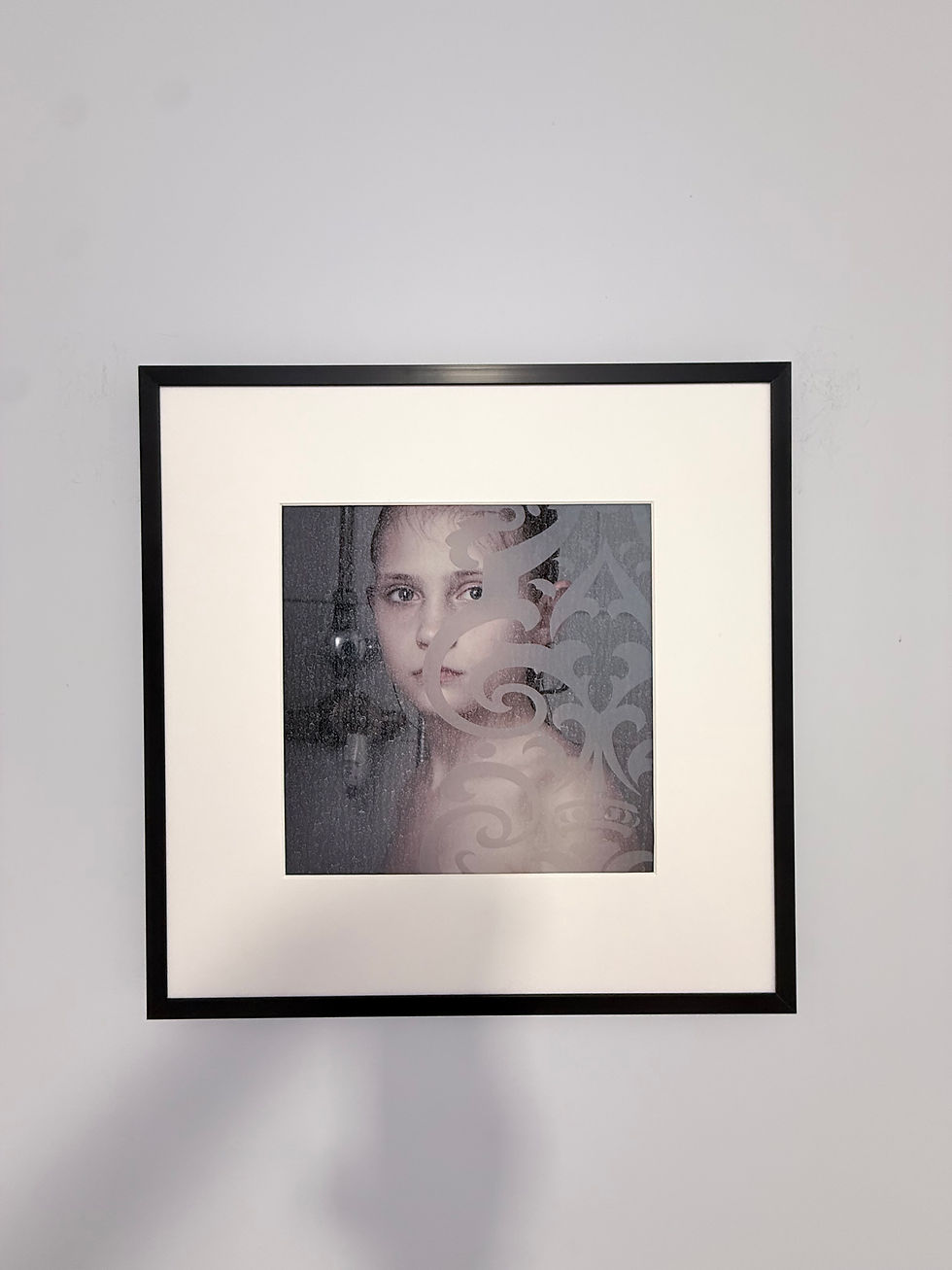
„Podążając za światłem” to retrospektywna wystawa Anny Ajtner, prowadząca przez wieloletnią drogę fotograficzną i artystyczną ukształtowaną przez bliskość, obecność i nieustanną przemianę. Jej początek wyznaczają intymne, performatywne portrety córki - obrazy zakorzenione w relacji, opiece i wspólnym doświadczeniu - które stopniowo otwierają się ku innym ciałom, krajobrazom oraz formom przejściowym pomiędzy fotografią analogową, cyfrową i obrazem ruchomym.
Centralnym motywem wystawy jest światło - nie jako forma estetyczna, lecz jako nośnik pamięci i doświadczenia. Portrety cielesne, wykonywane na analogowych błonach fotograficznych, noszą na sobie ślady procesu: paprochy, rysy, odciski palców, przesunięcia ostrości. Elementy te nie są defektem, lecz integralną częścią obrazu. Fotografia ujawnia tu swoją materialność i cielesność - kruchość oraz podatność na czas.
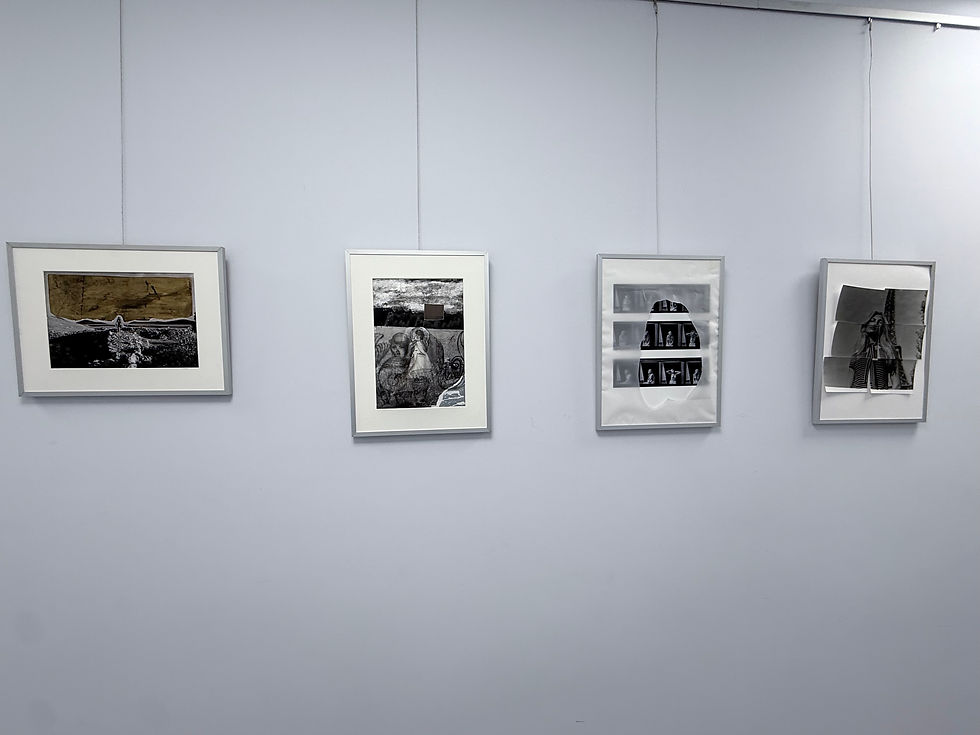
Wraz z rozwojem wystawy portret stopniowo otwiera się ku krajobrazowi, który staje się przestrzenią oddechu. Horyzonty i miejsca przejścia nie stanowią neutralnego tła - są przedłużeniem stanów wewnętrznych, obszarem, w którym obraz oddycha, rozszerza się i zwalnia. Zmianie tej towarzyszy przechodzenie pomiędzy technikami: analogowość i cyfrowość współistnieją, przenikają się i pozostają w dialogu - poprzez kolaż, multiplikację i wielokrotną ekspozycję - bez hierarchii.
Lightboxy z abstrakcyjnymi obrazami światła na wodzie oraz solnych powierzchniach Grecji wprowadzają wizualny puls wystawy - rytm wdechu i wydechu, napięcia i rozluźnienia. Są obrazami granicznymi, w których światło organizuje rytm oddechu całej ekspozycji.
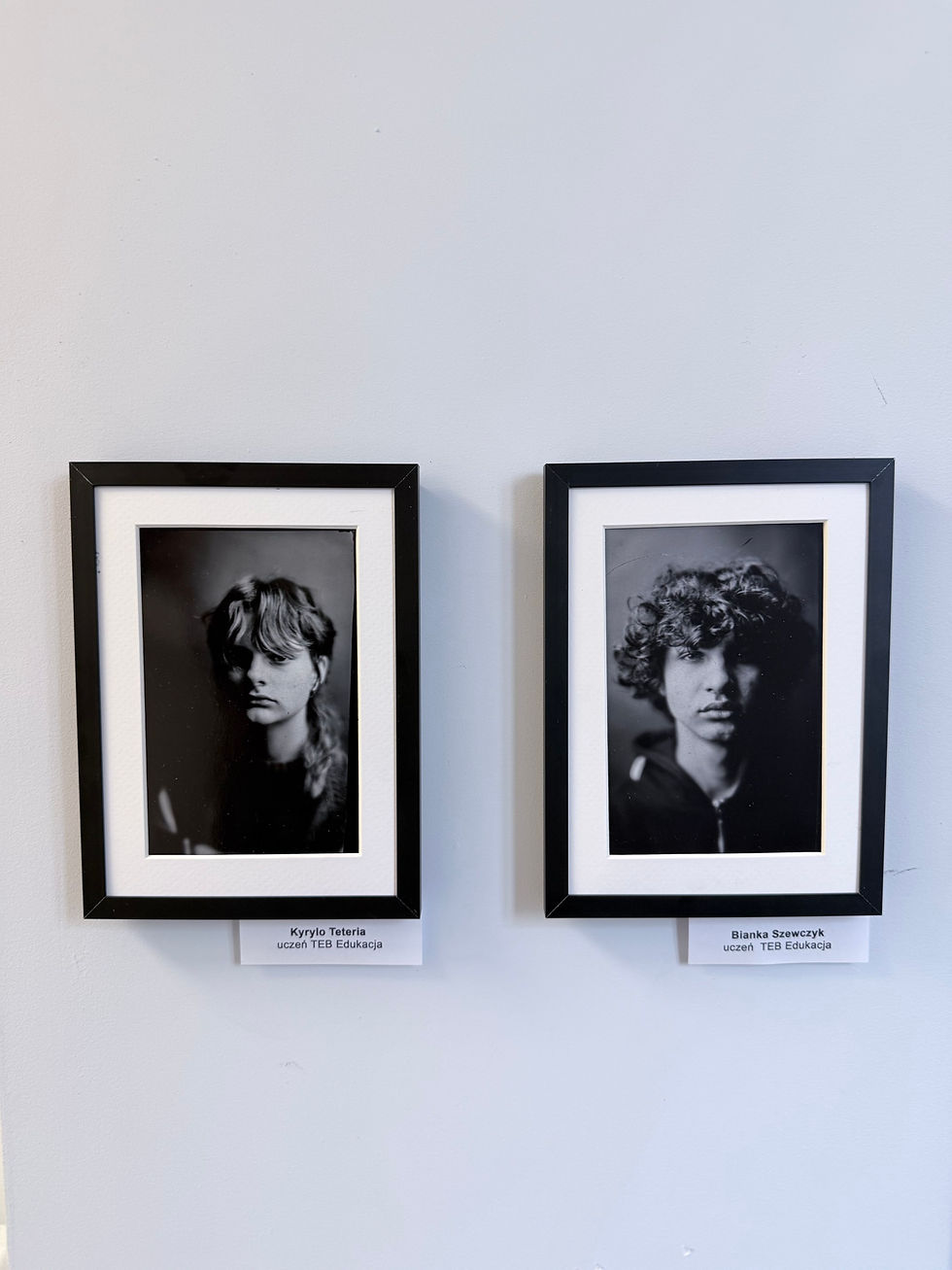
Kolorowe portrety córki, obecność prac uczniów oraz gościnny udział Marty Jankowskiej nie tworzą odrębnych rozdziałów, lecz rezonują w obrębie jednej struktury. Poszerzają narrację o wymiar relacyjny, edukacyjny i międzypokoleniowy, podkreślając fotografię jako pole współobecności, transmisji i uczenia się.
Wystawa nie posiada narracji linearnej. Jest organizmem, który oddycha. Nie jest archiwum, lecz drogą - zaproszeniem do uważnego bycia, do przechodzenia pomiędzy bliskością a dystansem, bezruchem a ruchem, materią a światłem. Podążanie za światłem nie oznacza tu celu, lecz ciągły akt obecności i patrzenia.
Zwieńczeniem wystawy są dwie najnowsze realizacje z cyklu „Malarstwo światła”, stanowiące ostatni etap tej wieloletniej podróży. Prace te przesuwają praktykę artystyczną Anny Ajtner poza fotografię rozumianą jako zapis lub reprezentację, w stronę obrazu jako zdarzenia i procesu. Światło nie rejestruje tu rzeczywistości, lecz działa bezpośrednio na materię obrazu - staje się jego sprawcą i współautorem jednocześnie.
W „Malarstwie światła” artystka tworzy jedynie pole początkowe: powierzchnię pokrytą chemią światłoczułą - cyjanotypową - oraz warunki ekspozycji. Dalej obraz rozwija się autonomicznie, pod wpływem światła, czasu i reakcji chemicznych. Proces ten pozostaje częściowo nieprzewidywalny, a jego rezultat staje się dla artystki formą odkrycia, a nie realizacją z góry założonego celu.
Czas funkcjonuje tu jako medium aktywne: obraz trwa, zmienia się, starzeje. Możliwość zatrzymania procesu poprzez impregnację lub zabezpieczenie wybranego momentu nie oznacza domknięcia, lecz świadome wskazanie etapu w nieustannym przepływie przemian. W niektórych pracach pojawia się ledwie zarysowana postać ludzka - ponownie postać córki artystki - ślad obecności, który nie organizuje narracji, lecz funkcjonuje jako punkt odniesienia dla procesów zachodzących w materii obrazu.
Te realizacje można odczytać jako naturalną konsekwencję wcześniejszych poszukiwań: od intymnego portretu, przez cielesność i krajobraz, aż po obraz, który niemal całkowicie oddaje sprawczość światłu i czasowi. „Malarstwo światła” nie zamyka wystawy, lecz ją rozszczelnia - pozostawiając widza w przestrzeni uważnej obserwacji, w której obraz nadal oddycha, zmienia się i pozostaje w ruchu.
„Podążając za światłem” jest zaproszeniem do kontemplacji - do zatrzymania się, spojrzenia i refleksji nad relacją obrazu, czasu i światła - zarówno w wymiarze osobistym, jak i uniwersalnym.
Wystawa dofinansowana ze stypendium Miasta Bydgoszcz.
Szczegółowe informacje zostaną opublikowane wkrótce.